Readers are Asking AI for Their Next Book Rec. Is Yours Showing Up?
Six Ways to Make Your Book Description Work for AI, Not Just Readers
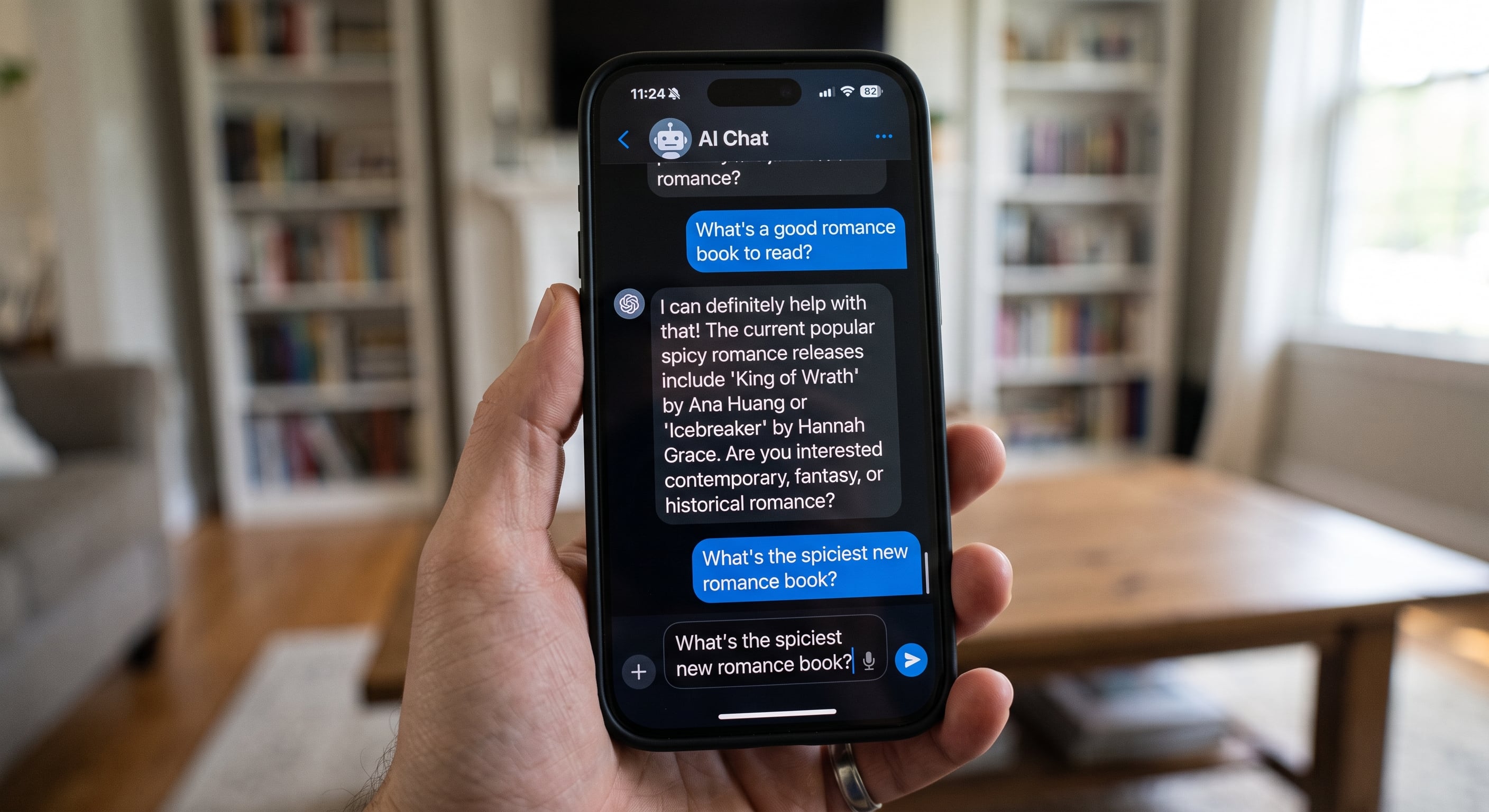
Romance readers are changing how they find their next book. A growing number open ChatGPT, Gemini, or Claude and ask for recommendations instead of typing into Amazon or Google. They type things like "books like Fourth Wing but spicier" or "best grumpy sunshine small town romance," and AI does the recommending.
That habit changes what actually works in a book description. Most authors open their blurb with an award or a bestseller badge. It feels earned, and it used to catch a reader's eye on a retail page. It does very little for an AI model, though. A badge does not tell a recommendation engine what your book is about or who it is for. It just links your book to a pile of unrelated titles that share the same award.
Cameron Lennon, a GEO (generative engine optimization) consultant, walked through this exact problem at this year's U.S. Book Show. He rewrote a bestseller's description to lead with genre, comp titles, and reader experience instead of the award stack. Here are the six changes that matter most for romance authors handling their own marketing.
1. Lead with genre, comps, and vibe
Open with what the book actually is instead of what it won. Name the subgenre, name two or three comparable authors, and describe the reader experience up front. Readers and AI models both respond to that structure faster than to a badge.
For romance, that might read like this.
A steamy small town romance for readers of [comp author]. A widowed rancher and his best friend's sister can't fight their attraction any longer. Slow burn, single dad, one bed, guaranteed happy ending.
That one paragraph does more work than three award badges.
2. Cut the keyword stuffing
AI reads for meaning, not keyword density. A blurb that repeats enemies to lovers three times, or strings tropes together like a hashtag list, reads as noise instead of a description.
Use each trope term once, in the place where it belongs. Put it in your subtitle, use it naturally in your description, and add it to one of your seven KDP backend keyword slots. Spread the rest of those slots across setting, character type, and tone instead of repeating the same phrase seven times. Clear and specific beats crowded, on Amazon, on your website, and in your social captions.
3. Make your website actually crawlable
Check your robots.txt file and confirm you are not blocking AI crawlers. A page an AI model cannot reach is a page it cannot recommend.
Beyond that, three things make the biggest difference.
Give each book and series its own page, with clear headings and full details.
Write an author bio page that reads like a brand, not a byline.
Add reviews or reader quotes directly on your site.
Your own site is also the one place you control fully, so it is worth using for the detail Facebook and Instagram will not let you post.
4. Don't skip video
Short, mood driven video outperforms static graphics. Thirty seconds is plenty. A few evocative lines of text over music, no plot summary, keeps people watching longer than almost anything else you can post. AI tools are increasingly reading the on screen text in video too, so the words you choose for that overlay carry the same weight as your written blurb. A simple trailer style clip made in Canva or CapCut is worth the time, even without a budget for anything fancier.
5. Stop relying on ad spend alone
A launch day sales spike used to be enough to catch an algorithm's attention. That is changing. Steady engagement across your website, your newsletter, and your social presence now carries more weight than a single paid push. Build all three at once instead of leaning on ads to do the job alone.
6. Ask the AI yourself
Open ChatGPT, Claude, or Gemini and ask it to recommend the best books in your subgenre, or books similar to yours. See who shows up. If it is not you, look at what those authors have in common. Their descriptions, their author pages, and even their Wikipedia entries all factor into how these tools rank recommendations. That gap is your roadmap.
________________________________________________________________________
Indie authors have a real advantage here. Big, traditional publishers move slowly across imprints and legal review. You can update your own Amazon description today without waiting on anyone.
If you'd rather spend time writing than wrangling algorithms, Wild Hearts Romance offers promotional placements across our newsletter, social channels, and website. We reach over 51,000 newsletter subscribers, more than 21,000 social followers, and up to 15,000 website visitors a month, all readers looking for their next romance.
Schedule your next book promotion